
The Unabridged Legacy of a Public Servant Leader

Thank you for Subscribing to Gov Business Review Weekly Brief
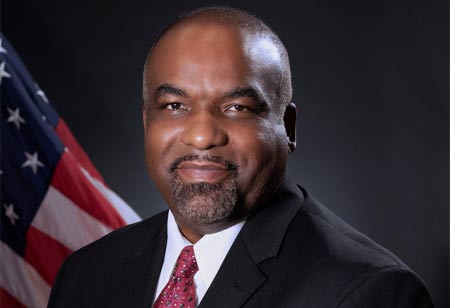
Dr. Marc-Antonie Cooper is a public service leader with more than 25 years of experience spanning municipal government, public safety, utilities, and the private sector. He holds a doctorate in international business and has completed advanced professional certifications through Harvard University and Cornell University. Over the course of his career, Dr. Marc-Antonie Cooper has served in senior leadership roles across multiple cities, including as a city manager, with a consistent focus on operational excellence, stakeholder alignment, and long-term community impact.
A Journey Rooted in Service Seven years patrolling the streets of Detroit marked the beginning of my career in public service as a police officer. Like many who enter the profession, I started with a strong desire to serve my community. Over time, I realized that while I wanted to remain in public service, I also wanted to evolve within it. That realization became the catalyst for a new chapter. I returned to school and completed a bachelor’s degree, two master’s degrees, and a doctorate, along with professional certifications through Harvard University and Cornell University. That academic foundation provided structure and discipline. I also spent a brief period in banking, which sharpened my understanding of systems, finance, and accountability, before returning fully to government service. Government from the Inside Out My next chapter unfolded with the City of Atlanta, where I began working in fleet management. That role gave me a practical, ground-level understanding of municipal operations. From there, I moved into watershed management and eventually became director of the Office of Customer and Business Services. In that role, I oversaw a broad portfolio that included billing, meter operations, sidewalk leak repairs, and field crews. It reinforced an important lesson: effective public leadership requires both operational fluency and empathy for the residents who rely on those services every day. I later returned to Detroit to serve as Chief Customer and Operations Officer (CCOO) of the Detroit Water Utility. After completing my Lean Six Sigma Master Black Belt, I transitioned formally into city management as deputy city manager of Deltona, Florida. I served there for approximately three years and also acted as interim city manager. From Deltona, I became the city manager of Forest Park, Georgia, the largest city in Clayton County, Ga. Leading a smaller organization sharpened my understanding of capacity, resource constraints, and the importance of setting realistic goals. Today, I serve as assistant city manager for the City of South Fulton, working under City Manager Sharon D. Subadan. In this role, I function as the city’s deputy COO, overseeing departments including parks and recreation, public works, public affairs, and cultural affairs. Vision Meets Reality Balancing strategic planning, innovation, and daily operational excellence in government begins with listening to residents. I have found that sometimes, public leaders and elected officials want to move quickly or pursue ambitious ideas without grounding them in community needs.Public service may not make you rich or famous, but it provides something far more lasting: the opportunity to leave a community better than you found it.
I agree We use cookies on this website to enhance your user experience. By clicking any link on this page you are giving your consent for us to set cookies. More info

However, if you would like to share the information in this article, you may use the link below: